These updates can directly increase revenue by reducing friction in the checkout process and optimizing ad spend for holiday shoppers.
What is YouTube Demand Gen and what changed?
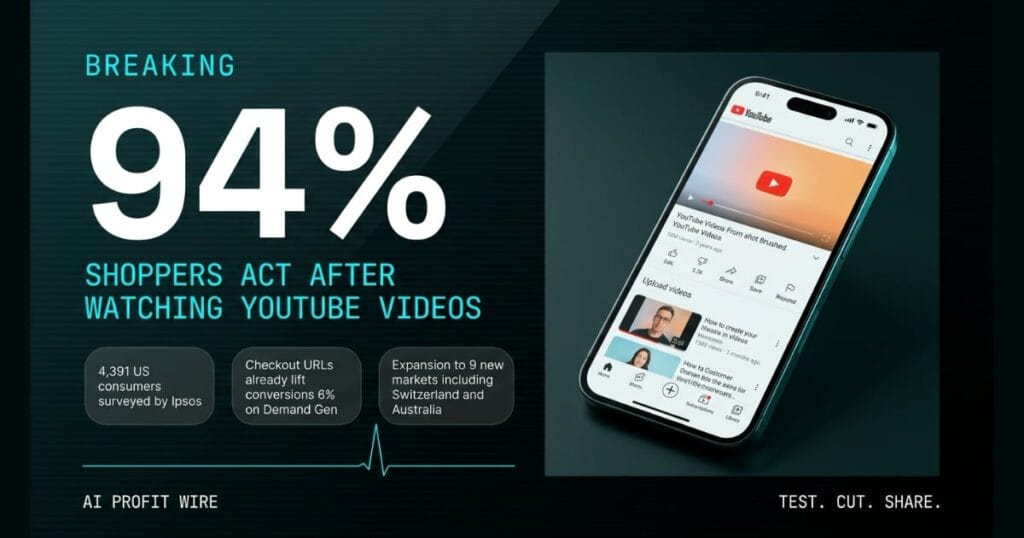
Google expanded its YouTube Demand Gen campaigns to include Checkout Links in 9 new markets and upgraded tROAS bidding functionality. The updates are designed to help retail advertisers drive direct sales ahead of the holiday season.
The newly supported markets for Checkout Links include Switzerland, Australia, South Korea, Indonesia, Mexico, France, Poland, Israel, and Argentina. Advertisers in these regions can now route video ad traffic directly to optimized cart pages.
Google also introduced upgraded tROAS bidding to prevent the system from being overly cautious early on in a campaign. The goal is to help retail campaigns hit their target return on ad spend faster.
Google is pushing YouTube video ads from a brand awareness tool to a direct-response checkout engine.
What is the evidence behind YouTube Demand Gen?
Google commissioned Ipsos to survey 4,391 US consumers about their holiday shopping habits between October 2025 and January 2026. The survey focused on shoppers aged 18 and older who had conducted holiday shopping activities in the past two days.
According to the survey, 94% of holiday shoppers who used YouTube reported taking further steps toward their purchase after watching a related video. Google uses this internal data to justify the shift toward direct checkout integrations.
Separately, Google’s own data shows advertisers who provided Checkout URLs boosted conversions by 6% on Demand Gen during September 2025. That number is the operational case for moving video traffic straight to cart pages.
The 94% action rate and the 6% conversion lift together justify collapsing the path from video view to checkout.
How does YouTube Demand Gen compare to the alternatives, and what background do small business owners need?
Standard video ads require users to navigate from a video to a homepage and then find a product. Checkout Links collapse that journey, which is the core operational advantage for small business owners.
Advertisers can also integrate Google Shopping directly into the ad experience and drive purchases via checkout links or the Universal Commerce Protocol. That integration is currently available in the US market only.
The upgraded tROAS bidding removes the early-campaign caution that previously throttled spend. Combined with direct checkout, this turns YouTube into a lower-funnel channel instead of an upper-funnel awareness play.
Collapsing the path from video view to cart page eliminates the navigation drop-off that kills conversions.
How does YouTube Demand Gen affect day-to-day operations for small businesses?
Small business owners must now configure dedicated checkout URLs instead of sending ad traffic to generic website homepages. This requires coordination between the marketing team and the backend ecommerce platform to ensure the links function properly.
If you are using a platform like Systeme.io for ecommerce and funnel management, your checkout page links need to be structured for this ad format before the holiday rush starts.
Campaign managers will need to monitor early spend closely, because the new tROAS upgrades are designed to prevent overly cautious pacing. Ad budgets could deploy faster than previous iterations allowed.
Day-to-day operations shift from generic campaign monitoring to strict checkout URL management and return target enforcement.
The 6% conversion lift on Checkout URLs is the number taped to the corner of the salon mirror, right next to the daily revenue target. You post a color correction video, the client watches it on YouTube, and they click through to your homepage. They scroll through service menus, get overwhelmed, and bounce without booking.
Google’s Ipsos data says 94% of holiday shoppers who watched a YouTube video took action toward a purchase, which means your video is doing its job and your landing page is killing the conversion. Checkout Links fix that exact failure by dropping the viewer on the cart page for the service they just watched. The upgraded tROAS bidding stops the algorithm from being overly cautious early on, which is when most campaigns fail to find traction.
Map every video asset to a dedicated checkout URL before the holiday rush starts. The 9 new markets just opened up, and the 6% conversion lift is sitting on the table for any salon that builds the checkout path now.
What is the final verdict on YouTube Demand Gen?
The expansion of Checkout Links to 9 new markets provides a clear operational advantage for retail advertisers heading into the holiday season. Small business owners can bypass generic landing pages and send qualified video traffic directly to cart pages.
The upgraded tROAS bidding supports this direct-response strategy by accelerating campaign optimization. Advertisers who relied on upper-funnel video metrics will need to adapt to a lower-funnel checkout model.
With 94% of surveyed shoppers taking action after watching a video and a confirmed 6% conversion lift on Checkout URLs, the friction between viewing and purchasing must be eliminated.
Small business owners must build dedicated checkout URLs and adopt tROAS bidding to capture direct holiday revenue from YouTube video ads.
Source: Google AI Blog
