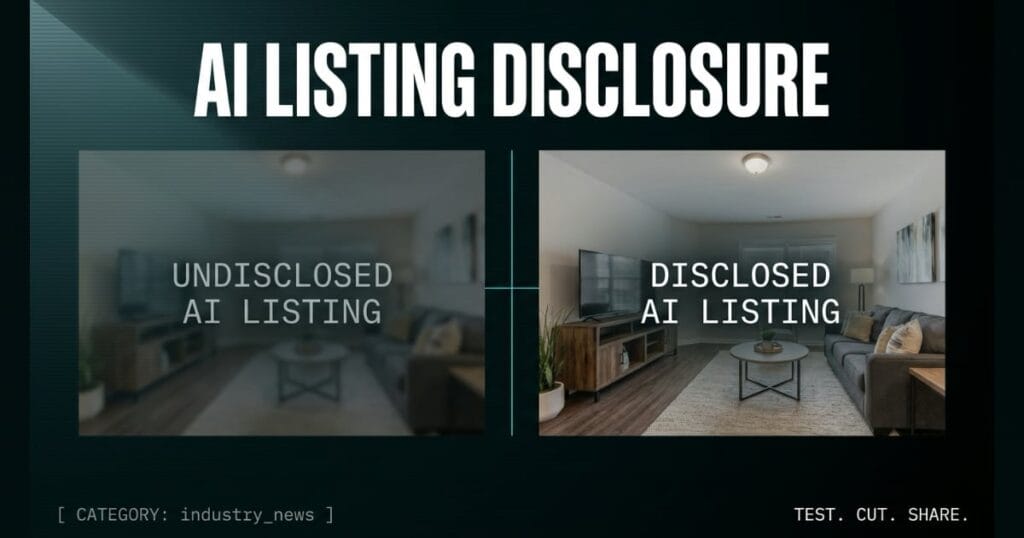
Real estate agents, landlords, and property managers using AI to enhance listing photos will need to adjust their marketing workflows to comply with these disclosure regulations.
What is NYC’s AI listing disclosure proposal and what changed?
NYC’s Rental Ripoff Report recommends requiring landlords and realtors to disclose when AI alters property listing photos.
Mayor Zohran Mamdani released the report after meeting with 2,400 New Yorkers across 5 boroughs during his first week in office. The disclosure recommendation sits inside a broader package that recognizes tenant unions, expands bargaining rights, and brings code enforcement systems into the 21st century.
Mamdani announced a separate click-to-cancel rule aimed at companies like Adobe the day before, signaling a coordinated crackdown on consumer-facing deception across both subscription billing and rental marketing. The report specifically calls out AI-generated and AI-edited images designed to make properties look more appealing, framing undisclosed AI alterations as deceptive landlord practices that target tenants who cannot verify listings in person.
The proposal turns AI-altered listing photos into a disclosed marketing practice rather than a hidden sales tactic.
What is the evidence behind NYC’s AI listing disclosure proposal?
The evidence comes from citywide Rental Ripoff Hearings that gathered testimony from 2,400 New Yorkers across 5 boroughs.
Mayor Mamdani established the hearings during his first week in office and met with residents across each borough to hear about safety, living conditions, and deceptive landlord practices. The report quotes tenants living with mold that was never treated, pests that were never addressed, and fees that were never explained.
Mayor Mamdani frames the report as turning tenant stories into concrete action, with every landlord who refuses to provide a safe home held accountable. Leila Bozorg, Deputy Mayor for Housing and Planning, calls the policies rooted in real experiences and addressing real concerns, while Cea Weaver, Director of the Mayor’s Office to Protect Tenants, frames the report as a new chapter in tenant power that brings tenant voices directly into policy.
Tenant testimony directly shaped the disclosure recommendation.
How does NYC’s AI listing disclosure proposal compare to the alternatives, and what background do small business owners need?
The report frames misleading AI listing images as an industry-wide problem that extends far beyond New York City.
Tenants who sign leases remotely, such as those moving for a new job, face the highest deception risk when landlords use digital tools to hide mold or pests, since they cannot tour the unit in person before signing. The disclosure recommendation covers listings altered using artificial intelligence or other digital tools, capturing both AI-generated images and AI-edited photography.
The results can be occasionally funny, but the report notes there is nothing funny about tenants being deceived when reality does not match the photos on a listing.
Disclosure up front beats a tenant dispute after the lease is signed.
The delivery driver signs for the repaired Subaru at the body shop and pulls away before the afternoon rush. The estimator’s portfolio photos showed a clean, straightened rear quarter panel under bright overhead light, and the shop reported success and closed the invoice.
The morning sun in the customer’s driveway exposes what the camera angles hid: a faint bondite seam along the wheel arch, a hairline crack in the tail light housing, and a slight color mismatch that only surfaces in natural light. The defects surface the next morning when the customer calls back furious, and the gap between the marketing photo and the physical reality is now a documented complaint.
Mayor Mamdani met with 2,400 New Yorkers across 5 boroughs to document exactly this kind of gap, and the city’s Rental Ripoff Report targets landlords running the same play with AI-altered listing photos. The disclosure rule forces the listing to match the unit on move-in day, which is the same standard every small business owner should apply to every product photo they ship.
How does NYC’s AI listing disclosure proposal affect day-to-day operations for small businesses?
Property managers and real estate agents must add a disclosure step to any listing that uses AI to generate or alter imagery.
The rule applies to both AI-generated photos and AI-edited photography, covering any listing altered using artificial intelligence or other digital tools. Firms managing units across the city face the highest exposure, since tenant testimony specifically called out mold and pest issues hidden by misleading visuals.
The disclosure step applies to every altered listing photo, adding a compliance checkpoint to the marketing pipeline for any firm using AI image tools. You can review more operational shifts in our signals archive covering AI compliance workflows.
Every altered listing photo now needs a disclosure checkpoint in the marketing pipeline.
What is the final verdict on NYC’s AI listing disclosure proposal?
The disclosure requirement grew directly out of the citywide hearings, and it closes a real gap: tenants had no way to know when a listing photo did not match the unit.
Property marketers now carry the burden of proof, not the tenant, and remote renters who cannot tour a unit in person stand to benefit the most from that shift.
Disclosure will not stop every landlord from touching up a listing photo, but it turns an undisclosed alteration into a documented violation instead of a gray area.
Undisclosed AI enhancements are now a documented liability for property marketers.
Source: petapixel.com
