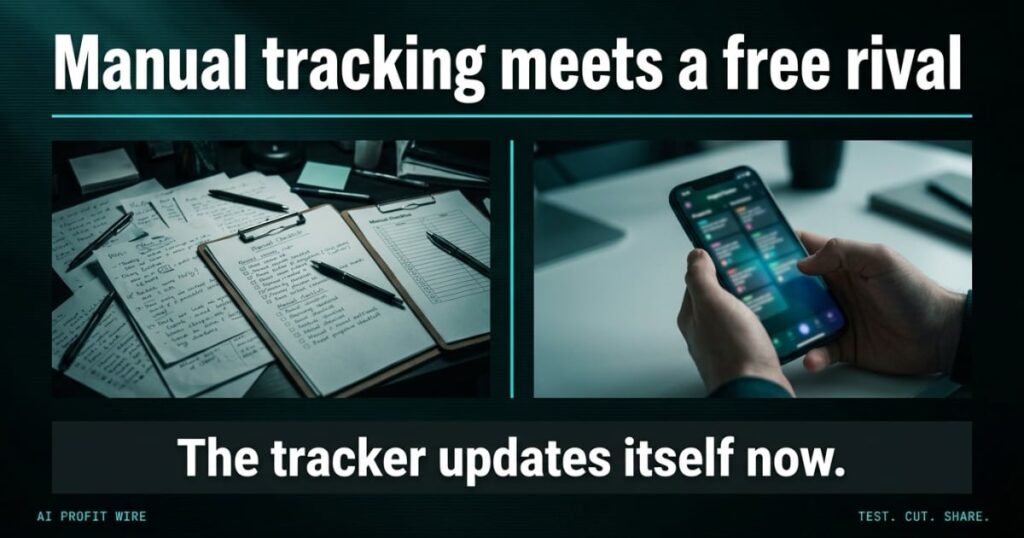
Provides small business owners with structured AI breakout chats to manage ongoing projects and track tasks automatically.
Meta Spaces turns a Muse agent chat into a working project tracker, event planner, or custom board, and connected apps keep each space current in the background without a manual refresh. The honest verdict: this is a convenience layer worth piloting on low-stakes trackers, and it is not yet a replacement for a managed project tool. The cost sits on Meta’s own Muse page: free for most of what people need, with subscription plans for people who want to do more, and no plan prices published as of November 6, 2026.
What is Meta Spaces and what does it do?
Spaces is a new layer inside Meta’s Muse agent interface: breakout conversations that live in the sidebar, each built around one topic or goal. Meta refers to them as custom experiences.
Clicking a space opens the conversation where Muse works toward that goal on your behalf. In Meta’s own words, describe an idea in chat and Muse builds a space for you, whether that is a tracker, a planner, or a project board.
The space holds that conversation, and Muse keeps working inside it toward the goal you set, which is what separates a space from a chat you scroll back through.
The integration is the interesting half: per TechCrunch’s coverage, spaces connect to third-party apps and information, and Meta says connecting the apps you use keeps spaces up to date in the background, so new concert dates, price changes, or savings progress appear without you asking.
Meta Spaces is a chat-built project surface that refreshes itself from the apps you connect.
Does Meta Spaces actually update projects in the background?
That is Meta’s stated behavior, and it is the claim your pilot has to test. The company’s description promises background updates from connected apps, and the launch material shows trackers, planners, and boards built from a chat description.
What is verifiable today: Muse itself launched September 8, 2026 in the US on iOS, Android, and muse.ai, with AI glasses listed as coming soon, per Meta’s announcement page.
The same page describes the plumbing underneath: Muse runs on a dedicated cloud computer, a separate Sentinel agent on that machine approves everything that reaches the internet, and Muse has no visibility into passwords or payment methods.
People choose which apps Muse connects to and how much access each one gets, and Meta states that conversations and VM data do not flow into its ad systems.
Under the hood, Muse runs on Muse Spark, the model Meta calls its most capable to date, it remembers details a person mentions once, and it can check out with Link, the payment flow Stripe built, when a task needs a purchase.
The sync promise is vendor-stated, the privacy architecture is vendor-documented, and neither carries independent verification yet.
Is Meta Spaces good enough to replace your project management app?
For personal and small-team tracking, the price is hard to argue with: a tracker, planner, or project board built from 1 chat description, at 0 dollars for most of what Muse does.
The gap sits where managed tools earn their fees: permissioning, audit trails, and formal accountability. Nothing in Meta’s launch material states that Spaces carries role-based access or exportable project history.
Zuckerberg’s own use points at the current scale: a BBQ game, an event tracker, and a home control dashboard, per his post on X. Those are personal dashboards, not client deliverables, and Meta’s own examples stay domestic: new concert dates, price changes, savings progress.
Spaces can replace a personal tracker today, and it is not yet a place to run client work.
A concert tracker adds a new venue row at 2 in the afternoon, pulled from a connected app, with nobody refreshing anything.
The same sync writes a wrong price into 3 quotes if the source feeds it bad data, and that is the trade: every Muse user can now build a self-updating tracker, and each one inherits a data-quality job.
Background automation earns its place on trackers you can afford to get wrong, so you pick the pilot list before the rollout.
Who is Meta Spaces actually for?
The adoption number does most of the talking. Zuckerberg told Meta’s October earnings call that Muse agents had 10 million users in the U.S. and Canada, less than 2 months after the agents debuted.
The Q3 2026 earnings transcript adds that 25% of those users open the service daily, which is the habit a project surface needs before it matters.
Zuckerberg’s post on X frames the audience the same way: people building a BBQ game, an event tracker, and a home control dashboard.
Muse Voice rounds out the week: announced Thursday, November 5, it lets users video chat with their agent and give commands by voice.
The current audience is individuals and small teams tracking personal-scale projects, not program managers running portfolios.
How many people use Meta Muse agents?
10 million users in the U.S. and Canada, within 6 weeks of launch, with 25% using the service daily, per the Q3 2026 earnings call.
The same quarter, Meta reported $64.6 billion in revenue, up 26% year over year, and Zuckerberg framed Muse and Muse Wonder as milestones toward what he calls personal superintelligence for everyone.
For the trajectory, our daily signals feed tracks Muse.
10 million users in 6 weeks is the adoption number that makes Spaces worth a pilot.
Should you use Meta Spaces instead of paying for a project tool?
Pilot it, and pick the pilot with care. One internal tracker with clean source data tells you within a week whether the background sync holds up, and a bad sync costs an afternoon of cleanup at that scale.
Keep client-facing boards on whatever you already run until Spaces proves reliable on your data, because background sync propagates errors at the same speed as updates.
The price stays at free for most of what people need, with subscription plans unpriced as of November 6, 2026, so the pilot risks time, not budget.
If you are deciding where agents fit this year, our guide on where a personal agent like Muse fits in a small business stack places it against the customer-facing tools you would pick first.
Use it free on internal trackers, and keep the paid tool for anything a client sees.
Meta Spaces: quick answers
What can you build with Meta Spaces?
Trackers, planners, and project boards from a chat description, per Meta. Zuckerberg’s own builds are a BBQ game, an event tracker, and a home control dashboard.
Does Meta Spaces cost anything?
Muse is free for most of what people need, with subscription plans for people who want to do more, and Meta has published no plan prices as of November 6, 2026.
When did Meta Muse launch?
September 8, 2026, in the US on iOS, Android, and muse.ai, with AI glasses listed as coming soon on Meta’s announcement page.
What is Muse Voice?
A video chat feature announced Thursday, November 5, letting users talk to their Muse agent and give it commands by voice.
Is Meta Muse available outside the U.S.?
Meta lists Muse as rolling out in the US on iOS, Android, and muse.ai, and neither the announcement nor the Spaces coverage states a wider release.
Source: TechCrunch AI. Last Updated: November 6, 2026. Signal Type: breaking.
