Reduces administrative time spent searching for meeting artifacts, allowing teams to prepare and follow up more efficiently.
What is the Google Meet centralized hub and what changed?
The Google Meet homepage on the web now serves as a centralized view for your meeting agenda and essential artifacts. This update shifts the platform from a launch screen into a dedicated workflow hub.
You can quickly access meeting descriptions and calendar attachments for upcoming calls directly from the interface. This eliminates the need to hunt through your inbox for the right link.
The homepage also displays meeting notes, recordings, and transcripts from past meetings in one place. You no longer need to dig through your Drive to find critical context from previous discussions.
The platform now functions as a complete meeting workflow manager rather than a basic video entry point.
What is the evidence behind the Google Meet centralized hub?
The official Google Workspace Updates blog confirms the rollout of this revamped homepage experience on July 21, 2026. The announcement details specific features designed to help users stay organized throughout their entire meeting workflow.
The documentation explicitly states there’s no admin control for this feature. The update applies automatically to all users with access to Google Meet on the web.
The Rapid Release rollout started July 21, 2026, with up to 15 days for feature visibility. Scheduled Release domains follow on August 17, 2026, with the same 15-day gradual rollout.
Google Workspace subscribers receive this organizational upgrade automatically with zero administrative overhead.
How does the Google Meet centralized hub compare to the alternatives, and what background do small business owners need?
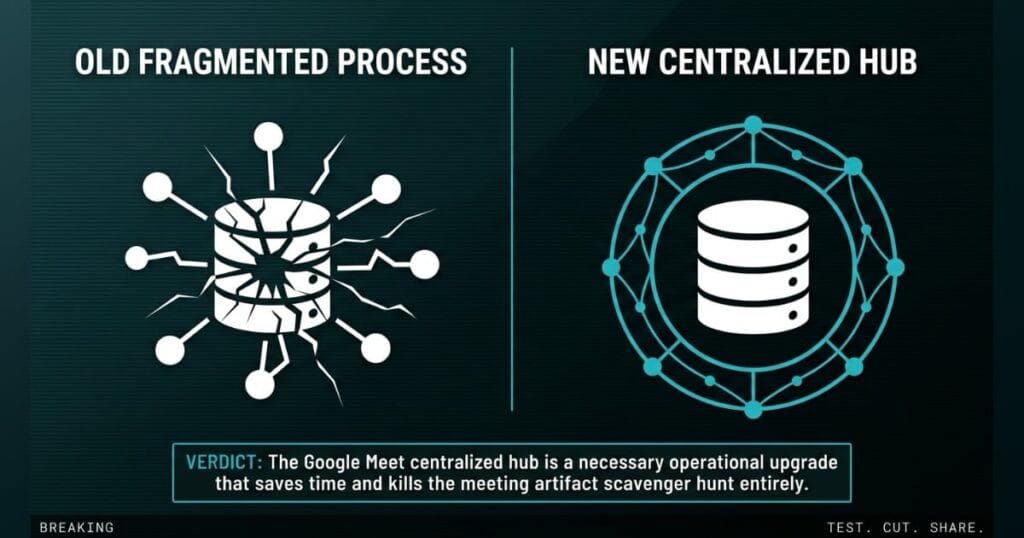
Before this update, meeting artifacts lived scattered across your inbox and Drive. You would hunt through emails for the right attachment and hope the recording eventually saved to a folder.
The new centralized hub collapses those separate locations into a single interface. You can look ahead using the new week and month navigators or revisit previous discussions without leaving the Meet homepage.
The hub matches the broader pattern of AI consolidating scattered workflows into a single pane of glass. You stop cross-referencing multiple tools to prep for one call.
Consolidating these artifacts natively inside Google Meet removes the operational friction of managing context across multiple separate platforms.
How does the Google Meet centralized hub affect day-to-day operations for small businesses?
Small business owners lose measurable productivity when they must search for meeting notes or recordings. This update directly addresses that lost time by centralizing resources exactly where the meeting happens.
Teams can prepare effectively by accessing descriptions and attachments instantly. This allows for more focused calls and faster decision-making processes.
You can also follow through easily by pulling up past transcripts on demand, a workflow pattern we track in our coverage of AI-driven workflow consolidation. The built-in schedule navigators ensure you never lose track of upcoming commitments.
This feature reduces administrative time spent searching for artifacts, allowing teams to prepare and follow up more efficiently.
A shipment of rare first editions arrives on the loading dock, but the packing slips are scattered across 3 different supplier portals. You spend the first hour of every Monday matching physical books to digital invoices instead of cataloging inventory.
The new Google Meet homepage works like a single receiving ledger that aggregates every packing slip, invoice, and previous order into one binder. Google Workspace pushed the hub live July 21 with a 15-day gradual rollout, so it’s already showing up on your team’s screens without an IT ticket.
When a customer calls asking about a specific vintage copy, you pull the transaction record instantly from the centralized hub instead of hunting through Gmail. The scavenger hunt dies, and you get back to closing the sale.
What is the final verdict on the Google Meet centralized hub?
The revamped Google Meet homepage successfully eliminates the operational friction of scattered meeting artifacts. It provides immediate value by centralizing schedules, notes, and recordings into a single view.
Small business owners benefit from the zero-admin rollout and the automatic integration within their existing Google Workspace subscriptions. The new week and month navigators add a layer of schedule management previously missing from the platform.
You can now prepare for upcoming calls and review past discussions without leaving the Meet interface. This collapses administrative search time and directly improves meeting workflow efficiency.
The Google Meet centralized hub is a necessary operational upgrade that saves time and kills the meeting artifact scavenger hunt entirely.
Source: workspaceupdates.googleblog.com
