Provides a privacy-first document editing alternative for businesses handling sensitive data without forced cloud AI subscriptions.
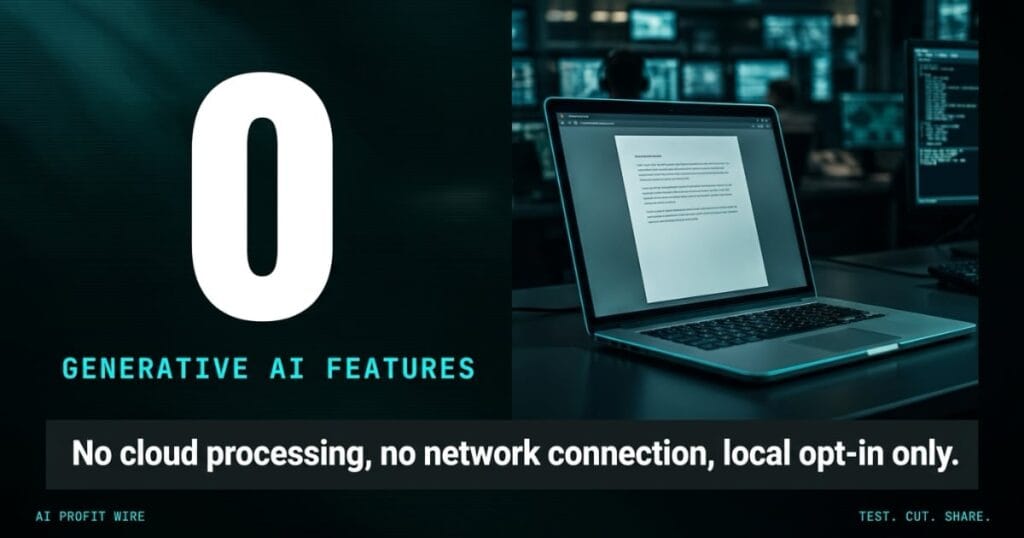
LibreOffice has turned the absence of AI into a documented product guarantee. The Document Foundation, the nonprofit behind the open-source suite, says the latest release contains 0 generative AI features and that it will not add AI to the software for the foreseeable future.
The position covers every default installation of a suite the foundation says is used by tens of millions of people and organizations globally.
LibreOffice has made the lack of AI a product guarantee, not an oversight.
What is the LibreOffice no AI policy?
The LibreOffice 26.8 release announcement states it plainly: the suite contains no generative AI features, and this is a deliberate design position rather than a missing feature.
The release landed in late August, and the foundation reiterated the stance in a follow-up blog post this week that TechCrunch covered as “no AI is now a software feature”.
The foundation says it does not reject AI out of hand, but it will not add AI to the software for the foreseeable future.
No AI in the default install is now the documented, deliberate position.
Does LibreOffice keep data on the machine?
Yes, per the foundation’s own statement: no part of the software requires a network connection to function, so documents are not uploaded to a server for processing.
The foundation’s words: any organisation handling confidential, legally privileged or personal data needs to know where that data goes, and the only assurance that survives an audit is that it does not leave the machine.
Users who want AI can install software extensions that connect the editor to local AI models, which keeps processing on the device. Those add-ons live in the official LibreOffice extensions portal, separate from the default install.
The foundation also notes there is currently no integration that meets all of its requirements, which include keeping user data on the device and avoiding reliance on a single AI provider.
The guarantee is architectural: a tool that never connects to a network cannot leak your documents to one.
Is LibreOffice good enough to replace a paid office suite?
For document work where privacy is the priority, LibreOffice holds a position paid suites do not: a written commitment that no AI processes your files.
Mainstream AI tools often require data to be uploaded and processed on a remote server, with the user holding no control over how that data is stored or for how long.
LibreOffice is free and open-source, which removes the subscription cost alongside the data exposure, and the foundation’s own release notes rule out network dependencies for the core suite.
The foundation describes its stance as an assessment of the technology today, not a definitive rejection, and says it will monitor where the technology is heading.
If your work involves privileged or personal data, LibreOffice is the only major editor making this guarantee in writing.
What does the no AI policy require from your business?
The signal hands you a checklist: every tool touching confidential data should be able to answer where that data goes.
Start with your document stack, because contracts, payroll files, and client records carry the highest audit exposure in most small businesses.
For founders whose exposure runs through personal data sitting on broker sites, our Optery intelligence report on scrubbing exposed personal data covers how automated removal works alongside a locked-down document setup.
LibreOffice’s decision also bucks a trend of software makers packing in AI features even at the expense of the user experience, a dynamic developers have started pushing back on.
Audit your document tools this week: the vendor that cannot answer the data question is your weakest link.
42 alterations. That is the number on the work order clipped to the counter at a tailor shop, and tucked under each ticket is a card with a customer’s measurements, phone number, and the date of the wedding they are fitting for.
Now the shop’s booking software adds an AI assistant, and those cards get synced to a server somewhere to power smart suggestions. The owner never agreed to that, never saw a setting for it, and cannot answer the client who asks where their information went.
LibreOffice’s 0-AI default is the owner keeping those cards in the drawer: the work gets done, and the customer’s details never leave the building. Tens of millions of users just got that drawer by default.
Should you use LibreOffice instead of paying for AI-heavy suites?
If your business handles confidential, legally privileged, or personal data, LibreOffice is production-ready and costs nothing, which makes the switch a low-risk test.
The software carries no paid tier, ships with 0 generative AI features, and functions without a network connection, per the foundation’s own release statement.
Users who want AI assistance are not locked out: extensions connecting to local models keep the processing on your device.
The foundation says it will closely monitor where the technology is heading, so the door stays open if an integration ever meets its requirements.
For privacy-sensitive document work, LibreOffice is the rare case where the free option carries the strongest guarantee.
Source: TechCrunch AI
