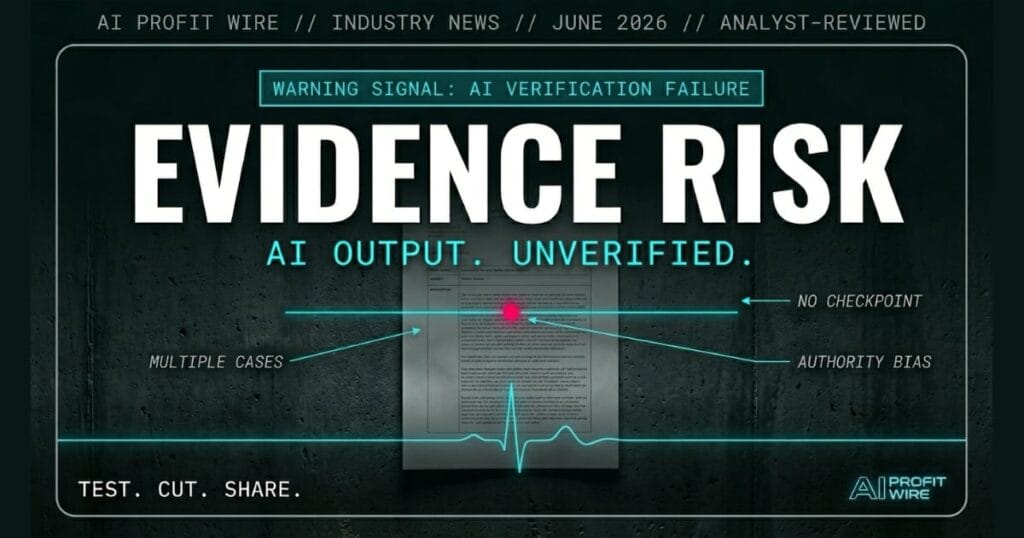
Reinforces the critical need to verify AI-generated outputs, as using unverified AI content in business operations, contracts, or marketing could lead to severe legal and reputational damage.
What is the Derbyshire police AI evidence investigation and what changed?
A police officer in Derbyshire, UK, is under investigation for using AI to create evidence across multiple criminal cases.
The story reached 335 points and generated 165 comments on Hacker News, a signal of widespread professional concern that crossed industry lines, with developers, lawyers, and business operators all recognizing the failure pattern in their own workflows.
AI-generated content has entered legal proceedings with real consequences, and the verification failure that caused it isn’t unique to law enforcement.
What is the evidence behind AI evidence creation risks?
Sky News confirmed the investigation, and the Hacker News engagement data shows the professional community’s recognition is broad: 335 points and 165 comments represent significant cross-industry awareness rather than niche technical interest.
The 165 comments reflect widespread concern about verification gaps, not about AI capability in isolation but about the human failure to validate AI outputs before using them as authoritative work product. AI tools used in the investigated cases produced outputs that appeared structurally correct while containing unverified content that carried real legal weight.
The failure mode is a process failure, not a technology failure: AI tools were used without the human verification checkpoint that every AI output requires.
How does the Derbyshire AI evidence case affect day-to-day operations for small businesses?
Small businesses face the same liability structure: AI-generated content that appears authoritative because it’s fluent and well-formatted, used in contracts, marketing materials, client reports, or compliance filings without a human verification step, creates the same legal exposure the Derbyshire case exposes.
The gap between “AI output” and “verified work product” is invisible in the document itself. A contract clause written by an AI and an identical clause written by a human look the same on the page. The legal liability attached to a fabricated or inaccurate clause doesn’t distinguish between the two. You can track how AI liability risks are surfacing across industries at the live AI signal archive where verification risk patterns are flagged as they clear the pipeline.
Every AI-generated sentence your business publishes without human authentication is a potential liability waiting to convert into cost.
A site inspector at a mid-size roofing contractor signs off on completed jobs using AI-generated inspection summaries pulled from crew-submitted photos and cross-referenced against a standard checklist, each summary outputting a formatted PDF that reads like a professional audit. The problem is that the AI is filling gaps, not finding them: it describes flashing as sealed when the photo angle is ambiguous, and marks drainage as clear when the camera doesn’t show the far end of the gutter. The inspector signs. The homeowner files a warranty claim 14 months later. No single AI output was an outright lie. Each one was the model’s best interpretation of incomplete visual data, formatted with the confidence of a human expert who was physically present. That’s the same failure mode the Derbyshire case is exposing at a much higher legal severity, and multiple case outputs cleared without a human checkpoint before the pattern was caught. Scale that to a business sending hundreds of AI-generated documents per month, and the probability of a costly error stops being theoretical.
What is the final verdict on AI evidence creation risks for small businesses?
AI-generated content is a draft, not a deliverable, and treating it as final creates the same legal exposure that put a Derbyshire police officer under investigation.
Small businesses must build mandatory human verification into any workflow where AI output carries contractual, legal, or reputational weight. The verification step doesn’t need to be elaborate: it needs to exist and be documented as part of the workflow.
Build a human checkpoint into every AI-assisted workflow where the output carries legal, contractual, or client-facing weight before it leaves your business.
Source: Sky News
