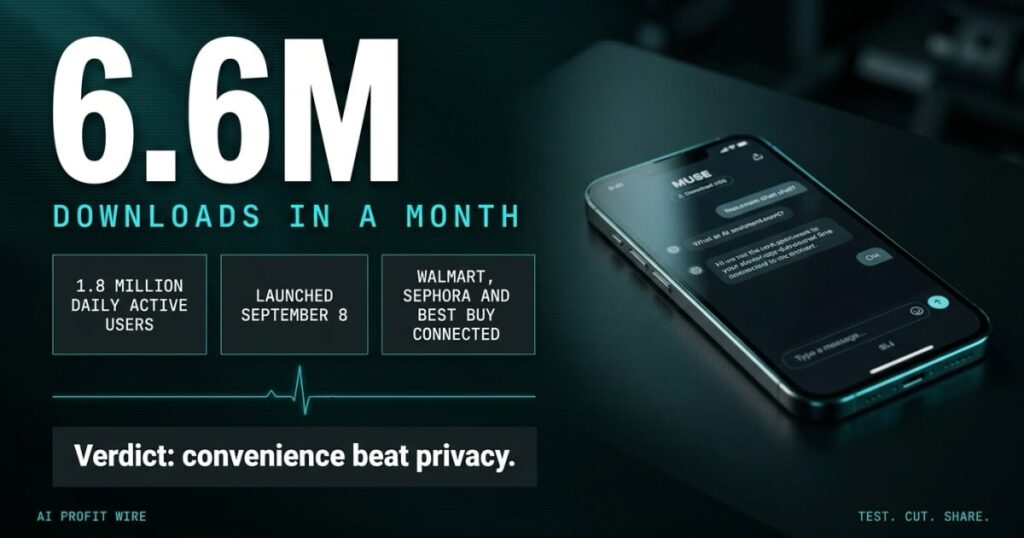
Shows rapid consumer adoption of personal AI agents that small businesses may soon need to integrate with.
Meta’s Muse is a personal AI agent that runs on iPhone and Android, and on October 7 it added a dedicated iPad app one month after its mobile debut. Bloomberg reported the adoption milestone this week, and Meta’s own launch announcement positions Muse as a personal agent built to handle everyday tasks like booking reservations, ordering groceries and completing purchases. The short version: 6.6 million downloads and 1.8 million daily active users in about a month, which is the fastest consumer AI adoption curve this year.
What is Meta Muse and what does it do?
Muse connects to the accounts you authorize and acts on them: it stays on top of email, meetings and bills, and it completes tasks like booking reservations, ordering groceries, setting goals and making purchases. Meta ships these integrations as “connectors,” and users add them selectively depending on which parts of their online life they want the agent to handle. The iPad release expanded the list with connectors aimed at small businesses, including Asana, Canva, Dropbox, Figma, QuickBooks, GitHub, Klaviyo and Zoom, plus connectors for Meta ad accounts.
Retail partners add the transaction layer, because Muse can now shop and complete purchases on Best Buy, Gap, Sephora, Walmart and Wayfair on the user’s behalf. Muse is a personal agent with real accounts and real payment rails attached, and that is what separates it from a chatbot in a tab.
How accurate are the Meta Muse download numbers?
The 6.6 million figure comes from Sensor Tower, the market intelligence firm that tracks app installs, and TechCrunch cites it as an estimate rather than a Meta claim. The 1.8 million daily active user figure was reported by Bloomberg alongside the download number, and both sit in the same order of magnitude you would expect from a Meta-scale launch. A DAU-to-install ratio near 27% inside the first month is a strong retention signal for a consumer agent, although it is still early and the iPad expansion is 1 day old.
Independent tracking will sharpen these numbers over the next quarter, and the TechCrunch coverage of the iPad launch is the best running record of the connector and partner additions so far. The numbers are estimates from named firms rather than vendor claims, and they all point the same direction: up.
How is Meta Muse different from using each app separately?
Doing the same errands by hand means opening your email, your calendar, three retailer apps and your bank, and re-entering the same context in each one. Muse holds that context in one conversation and executes across the connected accounts, which is why the friction cost lands closer to zero for routine tasks. The trade is data access: you grant a consumer agent a standing connection to the services that run your life.
There is also a live operational gap Meta is working to close, because websites still mistake agents for bots and block their access. On October 6 Meta announced it is working with industry partners on an open standard that would let personal AI agents identify themselves to businesses, which would help companies sort verified agents from scrapers. The old way is a pile of apps and passwords, and the new way is one agent with permissions, and the market has already voted with 6.6 million downloads.
Who is Meta Muse actually for?
The core user is a consumer who wants routine digital errands handled, and the connector strategy shows Meta is also courting the businesses those consumers work with. QuickBooks, Klaviyo, Zoom and Meta ad account connectors put small-business workflow inside a consumer app, and the retail partnerships put purchase capability right next to it. If you run an online store or a service business, your customers are already in this adoption curve whether you participate or not.
That is why we log every consumer agent launch in the other AI agent rollouts we’ve tracked this month, because the pattern matters more than any single app. Muse is for consumers first, although the businesses those consumers buy from are the ones that have to decide how to receive agent traffic.
The grocery order goes out at 6:40 p.m. from the passenger seat of a car, paid with the card on file, without opening a single store app. That is the Tuesday routine 1.8 million people now run through an agent, and the number stopped being a curiosity the week retail partners signed on. Convenience is the product, and the connected accounts are the toll.
Every founder watching this launch from the outside should notice which companies said yes to the agent. Walmart, Sephora and Best Buy decided the basket was worth the bot traffic, and their permission is the signal the rest of the market will follow. The errand economy just moved one layer closer to whoever holds the agent, and away from whoever holds the app store listing.
Should you connect your accounts to Meta Muse?
For personal use, the honest answer is to start with the low-stakes connectors and watch what the agent does with them, because selective authorization is built into the design. For business use, the calculus is different: your customers may hand an agent their buying decisions, and you want to be a store the agent can transact with, not one that blocks it. The connector list, the retail partners and the open-standard proposal are all moving the same direction.
Decide this quarter whether your checkout flow can welcome a verified agent, and watch how the open standard lands, because the businesses that prepare for agent traffic early will set the terms for everyone else. Adopt the connectors you can afford to expose, and keep payment authority on a short leash until the trust layer matures.
Source: Bloomberg Tech
