Helps small business owners understand how multi-agent AI systems will eventually be governed and controlled safely within operations.
What is an AI agent harness?
An AI agent harness is the control layer that sits between agentic code and the models themselves, and it handles routing, access control, context management, evaluation, and audit before an agent interacts with enterprise systems.
The term is spreading as enterprises move from single experimental agents to workflows involving multiple agents and models, as AI Business reports, and what counts as a harness, where it fits, and when an enterprise needs 1 remain unsettled questions.
SAP describes agents as autonomous systems that decide a course of action and employ multiple software tools to execute, which is the behavior a harness exists to govern, per SAP’s own AI agents resource.
Vendors are starting to package harnesses into products for enterprise customers, and that build-versus-buy push is the reason the term keeps showing up in vendor decks before it reaches purchase orders.
An AI agent harness is the air traffic control layer that governs agent actions before they reach your systems.
When does an AI agent need a harness?
Gareth de Bruyn, CEO, founder, and chief architect at Debcor Engineering, an SAP Gold Partner specializing in native AI integrations, questions the need for a harness when 1 agent works alone.
His test case is an OCR app he built that reads a conference badge, saves the contact into a CRM, and stops there, because the task is lightweight and straightforward.
That example matters because it draws the line at write access: reading a badge into a CRM touches 1 system with 1 record, which keeps the blast radius small.
The value shows up when multiple agents coordinate or their actions require oversight, and verification can require several AI calls, with each call adding cost, auditing, and tracking overhead before the action completes.
Single lightweight agents run fine alone, and multi-agent coordination is where a harness earns its place.
What happens when AI agents run without a harness?
Unmanaged multi-agent setups let independent models read and write across enterprise systems without centralized validation, and the audit trail breaks when verification needs several sequential AI calls.
Agent governance frameworks exist for this gap, because guardrails enforce boundaries on AI agent activity and catch actions that exceed an agent’s permissions, as SS&C Blue Prism’s governance framework describes.
De Bruyn’s air traffic control example: a sales order arrives by email, fax, or formatted file, and the harness decides whether to process it or route it through verification checks before a standardized order reaches the customer system.
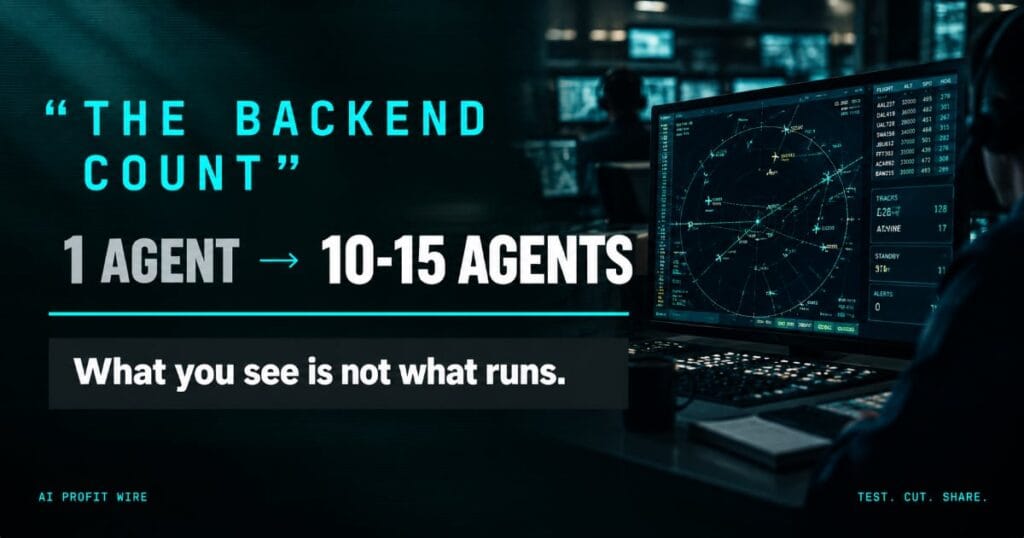
At SAP’s Sapphire conference, an accounts payable agent looked like 1 product, although De Bruyn says the workflow could involve 10 to 15 agents processing invoices, checking information, and making routing decisions behind the scenes.
That gap between marketing and backend reality is where audit failures breed, because the person approving the purchase never sees the agents doing the work.
Without a harness, the audit risk hides in the gap between what the demo shows and what the backend runs.
The front desk of your property management office runs on 3 inboxes, and your new AI assistant answers all of them. It books the plumber, refunds a tenant deposit, and updates the lease file in 1 pass, and the month-end review finds a double refund because 2 inboxes carried the same complaint.
De Bruyn’s enterprise point maps to that desk: 1 agent doing 1 lightweight job stays safe, and the risk arrives when the agent count behind 1 label hits 10 to 15 with no harness routing the traffic.
Each agent with write access needs a named referee, or your audit finds the errors for you.
Who actually needs an AI agent harness today?
Enterprises building workflows where multiple agents coordinate across systems need a harness now, and organizations running single-purpose automations can wait.
The build-versus-buy market for pre-made harnesses is emerging but immature, and the terminology can mislead, because a solution marketed as a single AI agent might involve many agents working together.
The immature market cuts both ways, because enterprises without the expertise to build are buying packages they can’t yet audit, and vendors know it.
New agent products cross the wire each week, and we log what they claim versus what runs in the daily signals archive, where you can watch the harness market mature in public.
Multi-system agent workflows need a harness now, and single-task automations can wait until they scale.
What should you do before deploying multi-agent AI?
Define the business outcome and the KPIs first, because De Bruyn’s advice to enterprise leaders is to start with what you’re trying to achieve and measure, then determine where a harness fits.
Break the workflow down to identify each system the AI touches, ask vendors how many backend agents operate inside the package, and price the verification calls, since several AI calls per action add cost.
The harness itself is a collection of components that brings the models, agents, and systems together to deliver the outcome, so treat it as infrastructure in the budget, not a feature in the demo.
De Bruyn’s closing warning applies to a team of 5 as much as a team of 5,000, and his line is blunt: AI is not magic, and adoption pressure is not a reason to skip controls.
Define the outcome, count the agents, and put the harness before the write access.
Source: AI Business
